
Once the veterinary plan is ready, organise the journey, meeting space, records and a straightforward way to postpone. Settling these details early reduces pressure to make rushed decisions on the day.
Confirm the arrangements in writing
Record the address, time, both owners’ contacts, accompanying people and intended sequence of the visit. Establish who will attend and who can stop an attempt. Agree how changes in timing, health or test results will be communicated. Tickets already purchased should not become a reason to continue an unsuitable plan.
[1] Колибри — планирование вязки · [2] PDSA — Should I breed from my pet
Prepare a separate records folder
Bring copies of identification and required breeding papers, dated veterinary reports, agreed test results and the contract. Keep an offline copy on your phone. For a border crossing, separately check current entry and carrier requirements: pedigree paperwork does not replace transport documents.
Pack familiar supplies
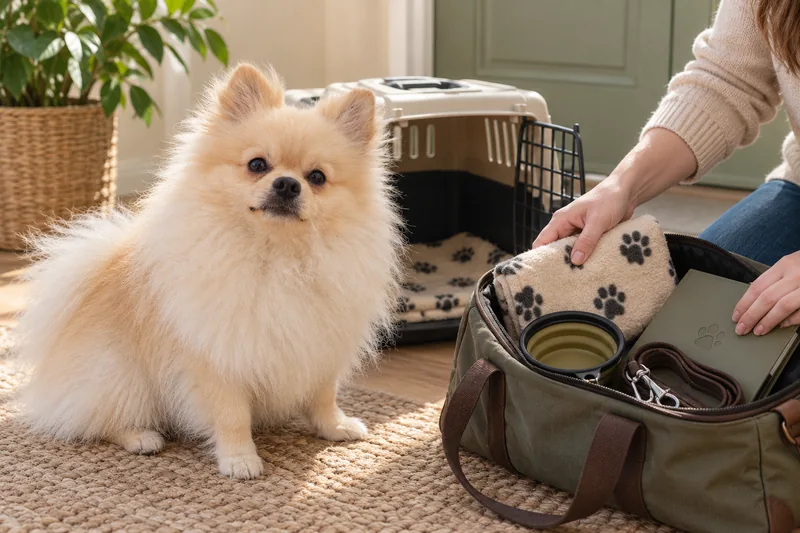
Take a suitable carrier or vehicle restraint, lead, water, bowl, familiar bedding, waste bags and cleaning materials. Follow the usual agreed routine for food and prescribed medication. Do not introduce an unfamiliar sedative, supplement or treat just to make the visit easier.
Inspect the space before introductions
Look for non-slip flooring, secured exits, a quiet setting and separate rooms where the dogs can rest apart. Remove unrelated dogs and unnecessary spectators. Agree on breaks in advance. Heat, travel fatigue and an unfamiliar confined space make it harder to assess how the dogs are coping.
Keep the option to stop
Pain, intense fear, illness or attempts to escape are reasons to stop and discuss the situation with a veterinarian. Do not force a dog to fulfil an arrangement. If conditions are unsuitable, rescheduling is preferable to trying to meet a deadline at any cost. An introductory meeting does not create an obligation to mate.
Record the outcome and next contact
Afterwards, record the date, observations, exchanged documents and agreed follow-up. Clarify whom to contact with health concerns and what information the veterinarian will need. Keep the nearest emergency clinic’s number and route available. This practical checklist complements medical preparation; the veterinarian sets examination and procedure timing.
Sources and further reading
A reference guide from Bruno ·
 YouTube
 WhatsApp
 Instagram